



How Huntsville City Schools Crafted a Multifaceted CTE Center
Alabama school district that built the facility has expanded its culinary, automotive tech and other training programs.

For years, Huntsville City Schools offered career and technical education at individual high schools within the Alabama K–12 district.
As technology advanced, however, larger, often expensive resources became available for CTE instruction, most of which were too costly and cumbersome to add to every location, according to CIO Emily Elam.
Instead, the district decided to create a new facility to serve as a CTE learning hub: the 81,000-square-foot Huntsville Center for Technology (HCT), which opened in August 2025.
After using previous CTE course participation data and community surveys to determine what programs the center would offer, the district worked with CDW to identify and incorporate the ideal tech tools and infrastructure.
“It was a brand-new building focused on STEM (science, technology, engineering and math); there's a welding center, an electrician station,” says CDW Client Executive Chuck Chiasson. “Our part was to make the audio and video easy for teachers and staff to use — from using Google Meet, connecting laptops and even having guest presenters. We were involved in the classroom, meeting rooms and office sides of the project.”
“Each program and room has very specific requirements for what can and can't be there, according to code; getting the technology just right for everybody was pretty challenging.”
— Emily Elam, CIO, Huntsville City Schools
Classroom Technology Enables Learning in Technical Settings
Blueprint measurements from the project manager helped CDW determine the size and number of interactive ViewSonic panels and speakers to install per classroom, Chiasson says; teachers also contributed design input.
“Each program and room has very specific requirements for what can and can't be there, according to code; getting the technology just right for everybody was pretty challenging,” Elam says. “We had more network drops in that building than anything we've done before.”
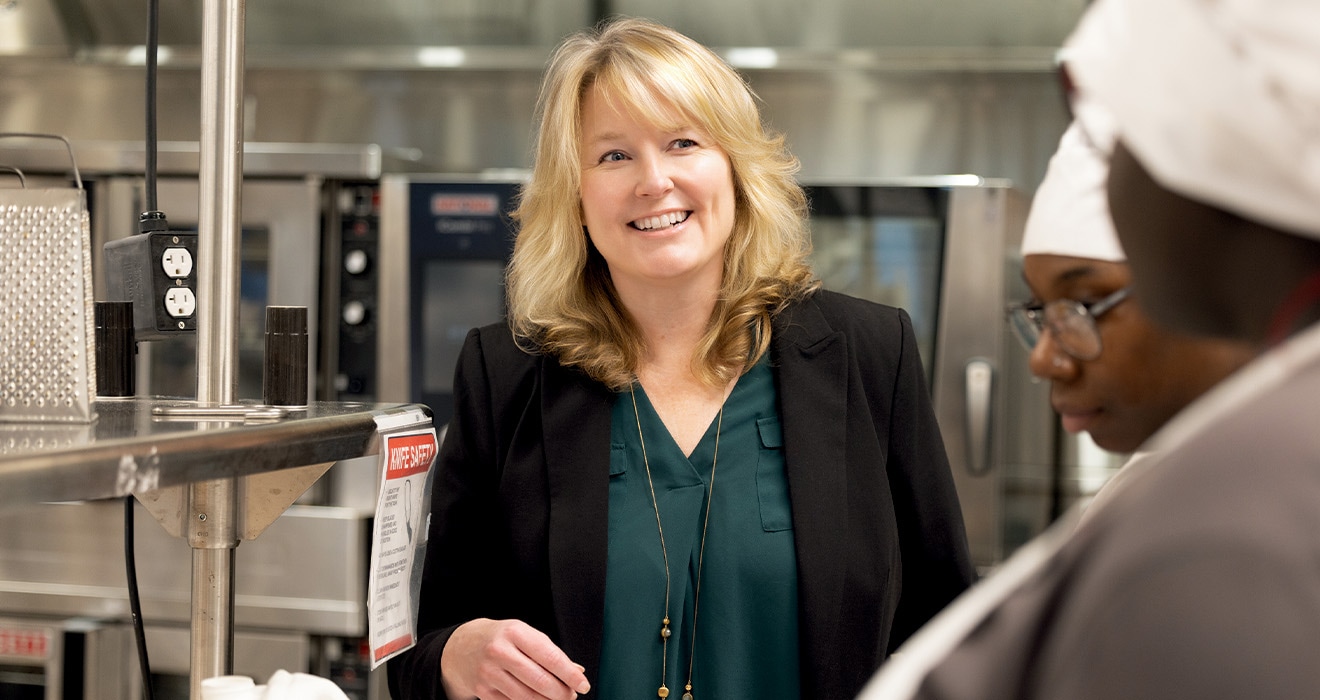
Elam and the culinary arts instructor, for instance, met several times before deciding how to attach screens to the six student workstations — large metal carts where food can be sliced or mixed — in the commercial teaching kitchen.
Using a remote, the teacher can zoom in on her workstation to show the technique she’s demonstrating, preventing students from having to crowd around her to try to see what she’s doing. The room’s configuration also will allow her to rearrange the stations in the future if she wants to, Elam says.
“We mounted a Chromebox on the back of each of those screens so video could be streamed wirelessly to make it a little bit more flexible,” she says. “There is so much happening in there; there are gas and electrical lines — everything is very carefully laid out.”
Compiling feedback from both educators and the technical side of a CTE construction project, Chiasson says, can help ensure the enhancements schools make have practical applications.
“It's all about how you integrate the tools into your curriculum,” he says, “because what ends up happening if you just throw technology at something is, it just gets pushed off to the side.”
By the start of the 2025-26 school year, all critical infrastructure and other aspects were in place in the new building, Elam says. In the months since students first began attending classes at the HCT, school officials and instructors have continued to discuss operability tweaks to maximize each space’s potential.
“Once our computer science teacher got students in his classroom at the beginning of last semester, we had to run a couple of new drops to 3D printers that were too big for the original location and had to be put in the center of the room,” Elam says. “It’s things like that — just quick changes to make sure it meets their needs.”
CTE Can Impart Valuable Work Skills and Experience
Students can use a variety of CTE tech items at the HCT. Engineering program participants can become credentialed in SolidWorks computer-aided design software, for example, and create a design with a Bambu Lab or other 3D printer, according to Zac McWhorter, HCT principal and the district’s CTE director.
Students can also obtain certification from organizations such as the National Institute for Metalworking Skills, an accreditation that precision machining program participants may receive while studying lathe and mill operations, drilling and computer numerical control (CNC) programming in classroom instruction and lab work.
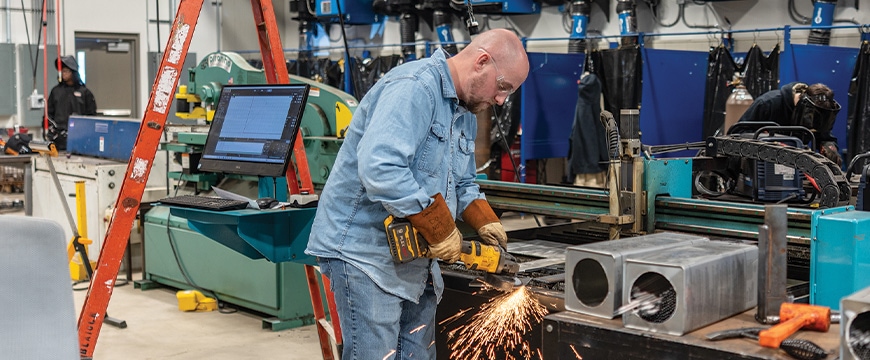
Some HCT students tackle requests from local businesses.
“They will take an old design and give it to our students to give them hands-on projects, or they might come to us and ask, ‘Can you design something for us?’” McWhorter says. “Students try to meet the customer’s needs and build it out, and then their design is 3D- or metal-printed.”
Manufacturing proficiencies are a focus at the HCT because production is prevalent in the area, according to McWhorter; in the industrial technology program, a new offering for the district, students learn machinery operation, safety and other procedures.
“Toyota Alabama came to us and said, ‘We need to engage high school students; we need more workers who are interested in the maintenance level,’” McWhorter says. “We really took the bull by the horns. There's a lot of technology involved — whether that's working on robotic arms, collaborating with our precision machining program on maintenance of machines, there's a lot of troubleshooting.”
Technology Facilitates Collaboration Outside the Classroom
The CTE center also contains other tech elements Chiasson says aren’t typically found in K–12 schools, such as Logitech Tap Scheduler devices outside of meeting rooms that teachers and staff members can use to check availability and reserve space. Inside meeting rooms, they can adjust audiovisual elements with Logitech Tap IP controllers.
The technology was chosen because it’s compatible with the HCT’s conferencing system, Google Meet, Chiasson says, and could also potentially familiarize students with functionality they may encounter at a job.
“That's a very enterprise corporate product,” he says. “You don't normally see that in a school environment. But the whole idea is, as you're teaching students these STEM concepts, you’re also teaching them how to work in the corporate field. It was something students would be using once they graduate.”
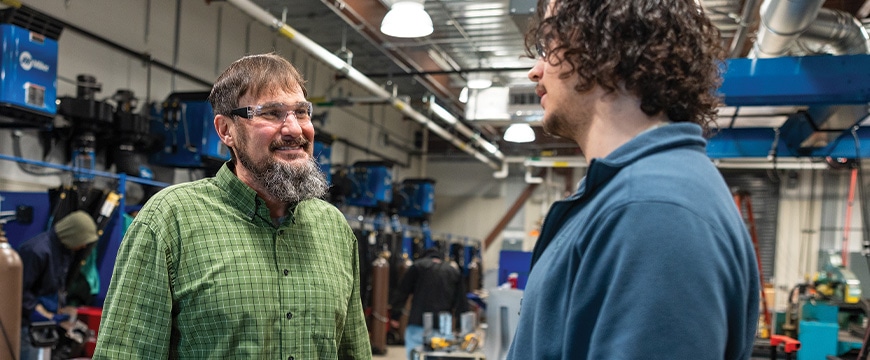
To date, students have shown considerable interest in the HCT’s CTE instruction. In its first year of operation, 577 enrolled in the center’s programs, which are designed to prepare them for roles in industries ranging from cosmetology to renewable energy.
“It was clear we needed to bring [our advanced machining devices] to a central location; plans started maybe five years ago to do that,” Elam says. “It was a big success, and our enrollment is way up in the CTE program as a whole. Once kids see how amazing the new facility is, everybody wants to go there.”