



Reimagining Virtualization for Resilient Federal IT
Outdated virtual infrastructure limits modernization efforts. Agencies must rethink virtualization as a strategic enabler of resilience, agility and mission success.

Moving Forward with Modernization
Virtualization has played a key role in helping federal IT streamline operations, increase efficiency and reduce reliance on hardware. But as demands evolve, spanning AI, edge computing, zero trust and hybrid work, many existing systems are nearing their limits. Continued progress depends on reimagining virtualization as a flexible and secure foundation for modern workloads.
Here’s how agencies are laying the groundwork for virtualization.
Standing on a Virtual Foundation
While virtualization has long delivered efficiency gains, many environments are now constrained by fragmented infrastructure and growing demands. Agencies balancing modernization with mission continuity are finding that older systems can introduce limitations that affect scalability and responsiveness. As mandates and technology needs evolve, agencies need a more adaptive and capable virtual foundation.

of federal leaders recognize the benefits of modernizing IT infrastructure, yet only 43% make it a current priority1
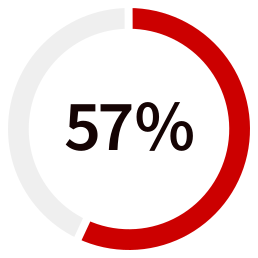
of agency leaders say current IT infrastructure is not built to handle new tools and demands1
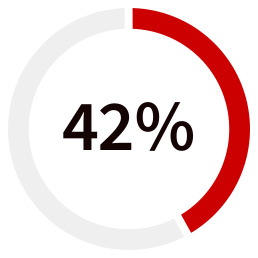
of federal agencies cite outdated hardware as a major barrier to modernization efforts1
Shifting to Future Simplicity
Modern virtualization is built for mobility, security and scale. By adopting container-based architectures, hyperconverged infrastructure and cloud-native services, agencies can improve workload flexibility and enhance cyber resilience while reducing complexity. This evolution supports secure remote work, seamless workload migration and future-ready digital services.
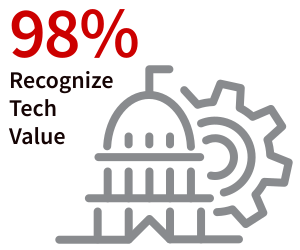
98% of federal leaders recognize the importance of investing in at least one emerging technology to modernize operations1
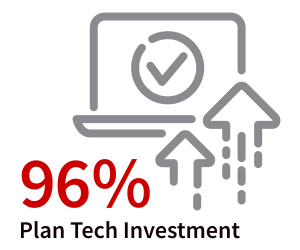
96% of federal agencies report concrete plans to enhance or invest in technology over the next five years1
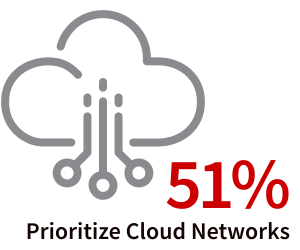
51% of agencies are investing in cloud networks and 41% in AI/ML, both of which depend on modern virtual infrastructure1
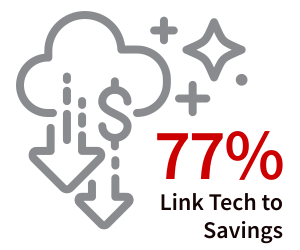
77% of federal leaders say adopting technologies such as cloud and AI will help reduce operational costs1
Setting the Stage for Transformation
Virtual modernization doesn’t have to be disruptive. Federal agencies making meaningful progress are taking practical steps that address current challenges and set the stage for longer-term transformation:

Shifting to hyperconverged and cloud-native virtual platforms
Upgrading VDI to support secure, high-performance remote access
Using containers and Kubernetes for agile application delivery
Embedding zero-trust security into the virtual layer
Freeing up IT staff with managed virtual environments
Discovering the Mission Backbone
CDW Government helps agencies modernize virtualization from the ground up — securely and strategically. Our experts bring deep experience across hybrid cloud, zero trust and application modernization with tailored solutions that meet mission, compliance and procurement needs. Whether you’re virtualizing desktops or redesigning infrastructure for AI workloads, we’ll help you move faster, stay compliant and improve outcomes.
CDW supports every stage of the journey so federal agencies can focus on the mission.
Source: 1 Ernst & Young LLP, “EY 2024 Federal, State and Local Trends Report,” 2024