



Smart Spending, Better Outcomes: IT Optimization for Public Sector Leaders
IT modernization works best when it’s designed for moving fast, spending smart and avoiding disruption.

Get the Work Done Smarter
Between aging infrastructure, tighter budgets and increased demand for digital services, state and local government (SLG) agencies are navigating the perfect storm. But the answer is not always new technology. It’s a combination of smarter technology and smarter spending — the ability to identify and eliminate inefficiencies across edge devices, core and code to build a new path to modernization.
Here’s how agencies can embrace a more strategic approach.
Start with What’s Already in Place
Modernization doesn’t have to start from scratch. Most agencies already have the tools; they just need better alignment. There are tools that uncover hidden costs, streamline IT operations and help redirect resources to the services that matter most to communities.
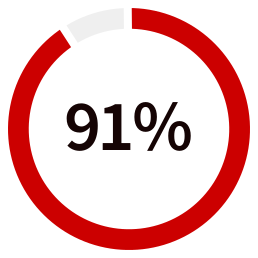
of SLG leaders say their agency would benefit from modernizing IT infrastructure, yet only 40% prioritize it today1
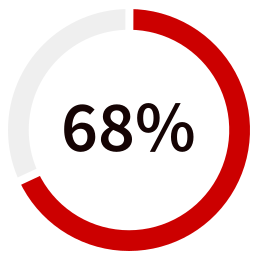
worry their current infrastructure isn’t equipped to support emerging technologies1
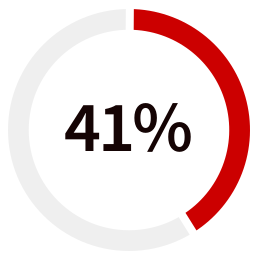
say modernization is likely to be a top priority in the next five years1
Growing with 360° Optimization
Progress doesn’t require a complete overhaul. Many agencies are finding momentum by optimizing across three core areas:
1
Edge. Managing device lifecycles, enabling mobile work and securing endpoints
2
Core. Controlling cloud costs, updating infrastructure and consolidating where possible
3
Code. Streamlining applications, automating repetitive tasks and tightening software licensing
This balanced approach gives agencies room to modernize while staying grounded in practical realities.
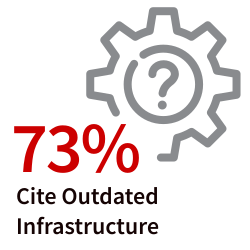
73% of state and local government agencies say their current infrastructure isn’t built to handle emerging technologies1
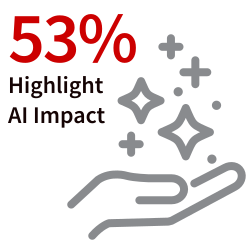
53% say generative AI will be the most impactful emerging IT area in the next 3–5 years2
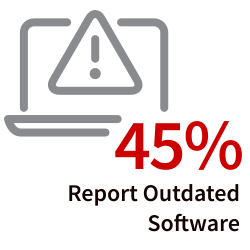
45% name outdated software and 36% point to outdated hardware as key barriers to modernization1
Proving Value Through Measurable Impact
Every agency has different goals, and all are looking for ways to work more efficiently. CDW Government helps agencies streamline procurement, reduce risk and improve service delivery through targeted optimization strategies.
Whether it’s cloud modernization, device lifecycle services, software usage audits or security planning for compliance, agencies can create space for meaningful change.
State and local government agencies can:

Gain visibility into underused IT assets
Reduce procurement complexity and licensing waste
Improve compliance and cybersecurity posture
Reinvest in public-facing services and innovation
Deliver better digital services to citizens
CDW Government supports these outcomes with expert-led workshops and scalable solutions tailored to the realities of government operations.
Earning Trust Through Efficiency
CDW Government’s public sector experts understand the nuances of government IT. From budget planning to policy alignment, we work within your existing constraints to deliver scalable solutions — all cleared for government use.
Whether you’re dealing with compliance pressure or simply trying to do more with the team you have, CDW helps you act without disrupting your essential services.
Build for what’s next so you can confidently focus every day on what matters most.
Sources:
1 Ernst & Young, EY Federal, State and Local Trends Report, 2024
2 NASCIO, PTI-Tech Forecast, January 2025